Every expert said the same thing about African consumers: they can’t afford subscriptions, the purchasing power isn’t there, the market won’t support premium digital services.
And yet, according to the News Agency of Nigeria, roughly 60 million Nigerians between ages 18 and 40 actively bet on sports. Nearly ₦2 billion changes hands in the betting market every single day. That’s ₦730 billion a year. Industry projections estimate the Nigerian sports betting market will generate $626 million in revenue in 2025 alone.
₦730 billion per year. From the same Nigerians who supposedly “can’t afford” a ₦2,500 Netflix subscription.
That contradiction is the starting point for one of the most important business case studies on the African continent. It’s also the story of how a market built by Nigerians was taken by a foreigner who understood the consumer better than the pioneers did.
Disclaimer: I do NOT support or promote gambling or betting. This article is purely a business case study. The betting industry has devastating consequences for millions of young Africans — addiction, debt, broken families. I am not celebrating that. But as someone who studies business models, I cannot ignore the fact that this industry cracked a code that a billion dollars worth of streaming companies couldn’t. The question isn’t whether betting is good. The question is: what did they understand about the African consumer that everyone else missed?
📋 Key Takeaways at a Glance
| Summary | |
| 💰 Betting Market Size | ₦730 billion/year spent on sports betting in Nigeria. 60 million active bettors. $626M projected revenue in 2025. |
| 🇳🇬 NairaBet | Nigeria’s first online betting platform (2009). Bootstrapped with ₦200K. Founder left for politics in 2018. Now a shadow of its former self. |
| 🇳🇬 Bet9ja | Launched 2013. Became 2nd most visited website in Nigeria. Net worth ~$750M. Now losing traffic (-11%) to SportyBet. |
| 🇮🇳 SportyBet | Founded by Indian entrepreneur Sudeep Ramnani (London/LSE). 88.5M monthly visits. Overtook Bet9ja. 20M+ users. ~$1B revenue by 2021. |
| 📱 The Playbook | Mobile-first app, better odds, instant payouts, data-light, pre-installed on Tecno/Infinix phones, social proof via winning screenshots. |
| 📺 SportyTV | FREE live Premier League, La Liga, Serie A, Champions League across Africa. No subscription. Monetised through in-match betting prompts. |
| 🔗 IrokoTV Connection | Ramnani was an early investor in IrokoTV. Watched $100M burn. Then built the opposite model: free content, monetise behavior. |
| 🎯 The Real Lesson | Africans don’t avoid spending. They avoid spending on things that don’t feel urgent. The winning model: value first, payment after, mobile always. |
The Pioneers: How Nigerians Built a Billion-Dollar Betting Industry
The Nigerian sports betting story begins in 2009, when Akin Alabi launched NairaBet — the country’s first fully functional online sports betting platform. Alabi bootstrapped it with less than ₦200,000. No venture capital. No foreign backers. Just a basic website, a dream, and a deep understanding of Nigerian football culture.
NairaBet became a household name. According to Nairametrics, it grew to become the most visited African sports bookmaking website, with over a thousand retail outlets across the country. Alabi proved that Nigerians would pay for digital entertainment — as long as it was immediate, exciting, and accessible.
Then came Bet9ja in 2013, founded by Kunle Soname. Bet9ja took the industry to an entirely different level. It opened physical betting shops on nearly every street in Nigeria’s major cities. It introduced virtual dog racing — an instant hit with punters who wanted immediate results. By 2018, Bet9ja was the second most visited website in the entire country, trailing only Google. Its estimated net worth reached $750 million.
Nigerians built this industry from nothing. They owned it. They defined it. They proved, beyond any doubt, that African consumers would spend money on digital products — when the product matched their psychology.
Then SportyBet Arrived With Sugar
SportyBet was founded by Sudeep Dalamal Ramnani, an Indian businessman based in London and a graduate of the London School of Economics. According to Communiqué, while still a student, Ramnani attended a guest lecture about the rapid spread of mobile phones across Africa. That lecture changed his trajectory. He first launched I-Cash, a pin voucher payment system, before pivoting to what would become his empire.
In 2013, Ramnani launched SportyBet. He had studied what NairaBet and Bet9ja had built, identified every friction point, and designed a product that eliminated them one by one.
1. Mobile-First When Everyone Else Was Desktop-First
While Bet9ja’s strength was its physical shops and desktop-optimized website, SportyBet built the fastest, sleekest mobile app in the market. According to TGM Research’s 2024 Nigeria Gambling Report, nearly 90% of Nigerian bets now come through smartphones. SportyBet was built for this reality from day one.
2. Better Odds — The Sugar
SportyBet consistently offered slightly higher payouts than competitors on major football matches. Pulse Sports Nigeria confirmed that on top Premier League matches, SportyBet frequently provides marginally better value. In betting, even a 0.05 difference in odds is enough to switch platforms. That fraction was the sugar.
3. Instant Payouts
While Nigerian platforms sometimes delayed withdrawals, SportyBet paid out almost instantly. In a market plagued by trust issues — where countless Nigerians have been burned by companies that take money but delay returns — speed became credibility. If you won at 9pm, the money was in your bank by 9:05pm. That changed everything.
4. Data-Light Design
The SportyBet app uses minimal data. When your customer is choosing between food and data, every megabyte matters. A betting app that loads instantly on a ₦30,000 Tecno phone with 100MB of data has a structural advantage over one that requires a stable broadband connection.
5. The Tecno Phone Deal Nobody Talks About
According to Communiqué’s investigation, SportyBet struck a distribution deal with Transsion, the Chinese company behind Tecno, Infinix, and Itel — the most popular phone brands in Africa. The SportyBet app came pre-installed on millions of new smartphones across the continent. Before a customer even bought data, SportyBet was already sitting on their home screen. Ramnani later repeated this exact playbook with PalmPay, the fintech he co-founded, which reached 30 million users within four years using the same Transsion partnership.
6. Boring Ads, Brilliant Social Proof
SportyBet’s advertisements are nothing special. Generic. Forgettable. But nobody cares. Because the real marketing happens organically — punters flooding Twitter and WhatsApp with screenshots of winning tickets. Every winning screenshot is a free advertisement more powerful than any billboard. SportyBet understood that in Nigeria, social proof from your peers is worth more than a million-naira ad campaign.
The Result: An Indian Man From London Ate the Market
As of 2024, SportyBet receives 88.5 million monthly visits, overtaking Bet9ja’s 67 million to become the most visited betting website in Nigeria. It is now the third most-used app in the entire country, with over 20 million users across Africa. Revenue reportedly grew from $5.5 million in 2018 to $1 billion by 2021.
NairaBet, the pioneer that started it all? Its founder left to become a politician in 2018. The platform still exists, but it doesn’t even have an iOS app in 2026. Bet9ja is fighting to hold on — its traffic is down nearly 11%.
An Indian entrepreneur, operating from London, studied what Nigerians built, added better technology and a pinch of sugar, and took the market.
But He Wasn’t Done: SportyTV and the Free Premier League
Here is where the story moves from impressive to genuinely disruptive.
Ramnani didn’t stop at betting. He launched SportyTV — a completely free sports streaming platform for Africa. Its growing portfolio of free-to-air rights now spans some of the world’s biggest competitions. According to Live Soccer TV, SportyTV broadcasts the Premier League, La Liga, Serie A, Bundesliga, the Champions League, and more across Nigeria, Ghana, South Africa, and Kenya.
The SportyTV app is free to download. No subscription. No decoder. No DStv. Just download and watch. In a region where DStv charges ₦29,500 per month for its Premium package, SportyTV is offering the Premier League for nothing.
The business model is elegant. During live matches, commentators drop real-time betting odds. The free content is the funnel. The betting app is the business. The matches are the sugar.
Think about what that means in context:
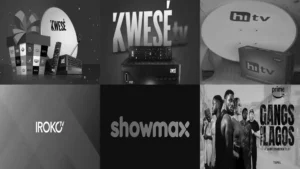
HiTV collapsed in 2011 trying to pay for Premier League broadcasting rights. Kwese TV died in 2019 with $130 million in debt, partly from failed sports content deals. DStv is bleeding 1.4 million subscribers in Nigeria because its subscription prices are unaffordable.
And SportyBet is giving the same content away for free — because the real money is not in the subscription. It is in what happens while you are watching.
Ramnani looked at the entire African entertainment and pay-TV industry, watched everyone burn billions trying to sell subscriptions, and built the opposite: give the content for free and monetise the behavior the content creates.
The IrokoTV Connection: He Watched the $100 Million Burn From the Inside
Here is the detail that ties this entire story together. According to Communiqué, Ramnani was an early investor in IrokoTV — the streaming platform that spent $100 million trying to get Nigerians to pay for Nollywood content before exiting the country in 2023.
He watched Jason Njoku deploy hundreds of kiosks, build call centres, and pioneer peer-to-peer file sharing. He watched from the inside as the most aggressive streaming company in African history burned through every dollar it had. He saw the struggle. He learned the lesson.
Then he went and built the opposite model. Free content. Monetise behavior. Mobile-first. No subscription. No paywall. No friction.
While everyone else was trying to be the “Netflix of Africa,” Ramnani was quietly building the only model that actually works on this continent.
The Uncomfortable Truth About How Africans Spend Money
The streaming industry’s core assumption was that Africans would not pay for digital content. The betting industry proved the opposite. Nigerians will pay — gladly, repeatedly, daily — for something that delivers immediate, tangible, urgent value.
What betting gets right:
✓ Immediate value — the thrill is instant, the result comes in 90 minutes
✓ Low barrier to entry — you can participate with as little as ₦100
✓ Mobile-first experience — fast app, low data, works on any phone
✓ Urgency — the match is happening NOW, the window to act is closing
✓ Social currency — everyone talks about their tickets, shares wins, debates odds
What streaming got wrong:
✗ Delayed value — watch now, gain nothing tangible
✗ High barrier — ₦2,500 to ₦8,500 per month upfront commitment
✗ Data-heavy — 1 to 3 GB per movie on top of the subscription cost
✗ No urgency — “I’ll watch it later” means never
✗ No social currency — nobody brags about their Netflix subscription
Nigerians do not avoid spending money. They avoid spending money on things that do not feel urgent. A Premier League match starting in ten minutes creates urgency. A monthly subscription to maybe watch something later does not.
The Real Lesson: Understanding Your Market Before Someone Else Does
Strip the betting away. Forget the industry. The lesson underneath is universal, and it applies to every business trying to sell to African consumers.
Your customer wants value FIRST and will pay AFTER. The ad-supported model, the freemium model, the “try before you buy” model — these are not compromises. In Africa, they are the only viable acquisition strategies. YouTube understood this. SportyTV understood this. Every streaming company that charged upfront failed.
Mobile is not a channel. It is THE channel. With approximately 600 million smartphones in use across Africa and less than 5% fibre broadband penetration, any product that is not designed mobile-first is designed to fail. SportyBet’s app was built for ₦30,000 Tecno phones on 2G networks. That is what winning looks like.
Free is not a loss. It is an acquisition strategy. SportyTV gives away Premier League matches that DStv charges ₦29,500 per month to watch. The content is the hook. The monetisation happens downstream. This is the same logic that made Google, Facebook, and YouTube trillion-dollar companies. Africa is no different.
The business model that wins in Africa is the one that removes the most friction. Not the one with the best content. Not the one with the most funding. The one that makes it easiest to say yes. Instant payouts. No credit card required. Works on any phone. Loads on low data. Every friction point you remove is a customer you gain.
Other industries are already learning this. Fintech figured it out — that is why OPay and PalmPay are winning across Nigeria with zero-fee transfers and instant mobile wallets. Entertainment is still learning the hard way, at a cost of $1.5 billion and counting.
Africa Is Not Cursed. But It Is Brutally Honest.
Nigerians will pay for what they value. They proved it with betting — ₦730 billion a year worth of proof. The streaming industry did not fail because Africans are poor. It failed because it offered the wrong product, at the wrong price, through the wrong channel, with the wrong value proposition.
And the man who understood this best was not from Lagos or Johannesburg. He was from India, operating from London, with a degree from the London School of Economics.
That should keep every African entrepreneur up at night.
Because the lesson is not just about betting or entertainment. It is about every industry on this continent.
If you do not build for your own market — if you do not understand what your people actually value, what they will actually pay for, and how they want to pay for it — someone else will come with sugar.
And they will take it from you.
Sources & References
All data, quotes, and statistics in this article are sourced from the following publications. Anchor text links are embedded throughout the article for inline attribution.
[1] Economics of $2 Billion Sports Betting Industry in Nigeria — Nairametrics, 2019 — https://nairametrics.com/2018/07/06/economics-of-sports-betting/
[2] Sports Betting — Nigeria Market Forecast — Statista, 2025 — https://www.statista.com/outlook/amo/gambling/sports-betting/nigeria
[3] Meet Akin Alabi, Founder of Nigeria’s First Online Sports Betting Platform — Nairametrics, 2018 — https://nairametrics.com/2018/06/23/meet-the-ceo-of-nairabet-akin-alabi/
[4] Akin Alabi: The Man Who Brought Sports Betting to Nigerian Youths — Nairametrics, 2021 — https://nairametrics.com/2021/12/11/akin-alabi-the-man-who-brought-sports-betting-…
[5] Meet the Owners of Top Sport Betting Companies in Nigeria — Jojo Naija, 2023 — https://jojonaija.com/meet-the-owners-of-top-betting-companies-in-nigeria/
[6] SportyBet Overtakes Bet9ja as Most Visited Betting Website in Nigeria — AccuratePredict, 2024 — https://accuratepredict.com/news/sportybet-overtakes-bet9ja
[7] Fresh Data in Nigeria: Sports Betting and Gambling Insights 2024 — TGM Research, 2024 — https://tgmresearch.com/gambling-sports-betting-2024-insights-nigeria.html
[8] Bet9ja vs SportyBet: The Ultimate Comparison — Pulse Sports Nigeria, 2025 — https://www.pulsesports.ng/betting/story/bet9ja-vs-sportybet-the-ultimate-comparis…
[9] How Much Does SportyBet Make in a Day — SportsBetting.name.ng, 2025 — https://sportsbetting.name.ng/how-much-does-sportybet-make-in-a-day/
[10] Foreign Sports Betting Companies Invading Nigeria Market — CheerOnNigeria, 2021 — https://cheeronnigeria.blogspot.com/2021/05/foreign-sports-betting-companies.html?m=1
[11] Nairabet Founder Akin Alabi to Quit His Own Company — Technext, 2018 — https://technext24.com/2018/06/22/nairabet-founder-akin-alabi-quit-own-company-con…
[12] Nairabet Review 2026 — Champsbase, 2026 — https://champsbase.com/en/reviews/nairabet/
[13] Top 5 Betting Companies in Nigeria 2025 — Betsloaded, 2025 — https://www.betsloaded.com/b/top-5-betting-companies-in-nigeria-2025-edition/
[14] Sporty TV Wants to Make Live Sports Free for All Africans — Communiqué, July 2025 — https://www.readcommunique.com/p/sporty-tv-live-sports-play
[15] Sporty TV — TV Schedule and Broadcast Rights — Live Soccer TV, 2025 — https://www.livesoccertv.com/channels/sporty-tv-st/
[16] SportyTV: Live Sports Stream — Apple App Store, 2026 — https://apps.apple.com/us/app/sportytv-live-sports-stream/id6746158223
[17] Top 5 Sports Betting Platforms in Nigeria in 2025 — Technext, 2025 — https://technext24.com/2025/03/24/top-5-sports-betting-platforms-nigeria/
[18] Nigeria Online Gambling Growth 2025 — FocusGN, 2025 — https://focusgn.com/africa/nigerias-online-gambling-market-set-to-hit-500m-this-year
[19] While Africa’s Sports Betting Industry Grows, Many Worry About Who Will Lose — PBS News, 2022 — https://www.pbs.org/newshour/world/while-africas-sports-betting-industry-grows-man…