In the last 15 years, more than $1.5 billion has been spent trying to build subscription-based streaming and pay-TV businesses across Africa. Every single one has either failed outright or is bleeding subscribers at an alarming rate.
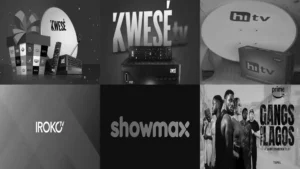
IrokoTV. HiTV. Kwese TV. Cell C Black. And now, Showmax — which officially shut down on March 5, 2026, after 11 years and hundreds of millions of dollars in investment.
The question is no longer whether the subscription business model in Africa can work for streaming. The evidence is overwhelming. The real question is: why does it keep failing, and what model should replace it?
The $1.5 Billion African Streaming Graveyard
Before examining why subscription streaming fails in Africa, it helps to understand the sheer scale of the losses. These are not small experiments. These are well-funded, well-intentioned companies backed by some of the most experienced investors and operators on the continent.
IrokoTV — $100 Million Lost
Founded in 2011 by Jason Njoku and backed by Tiger Global (the same firm that invested in Netflix), IrokoTV was nicknamed the “Netflix of Africa.” The company raised $35 million in venture capital and, according to Njoku’s own account on his blog, spent over $100 million in combined funding and revenue trying to win the Nigerian streaming market.
Despite deploying hundreds of manned kiosks, outbound call centres, agency networks, and even pioneering peer-to-peer file sharing, IrokoTV never found a sustainable subscriber base in Nigeria. The company exited the country entirely in 2023. In 2025, a Nigerian court froze Njoku’s bank accounts over unpaid content licensing debts.
“We could have reached the same conclusions with $5–10 million versus the $100 million we ended up investing,” Njoku reflected. “Streaming wasn’t the winning model for Nollywood in Nigeria.”
(Source: Pulse Nigeria — Jason Njoku Reflects on IrokoTV’s $100M Gamble)
HiTV — ₦9.5 Billion in Debt
Nigeria’s first indigenous pay-TV service launched in 2007 and stunned the market by winning exclusive English Premier League broadcasting rights, capturing 80% of EPL coverage from DStv. But when HiTV won the rights again the following season, it could not pay. DStv swooped in as the second bidder.
By November 2011, Guaranty Trust Bank appointed receiver managers who stormed HiTV’s Lagos headquarters and shut down operations. According to Grokipedia, the company owed approximately ₦9.5 billion. Internal shareholder disputes had blocked the company from raising the capital it needed to survive.
(Source: Vanguard — Remembering HiTV as TSTV Comes to Town)
Kwese TV — $130 Million in Debt
Backed by Zimbabwe’s wealthiest man, Strive Masiyiwa, Kwese TV operated across 12 African countries and secured broadcasting deals with the NBA, FIFA, UEFA, the English Premier League, Formula One, and ESPN. It looked unstoppable.
Then Zimbabwe stopped recognising the US dollar and other foreign currencies in 2019. Content providers required payment in forex. Kwese could not pay. According to Equity Axis, the company accumulated over $130 million in outstanding debt before entering voluntary judicial management. All services were discontinued by August 2019.
(Source: The Broadcast Bridge — Africa’s Kwesé Play Shuts Down)
Cell C Black — R1.5 Billion Burned in Two Years
South African mobile operator Cell C launched its streaming platform Black in November 2017, investing over R1.5 billion (approximately $80 million) in just two years. According to ITWeb, the platform attracted only 60,000 completed transactions. The company shut the service down in December 2019. Former CEO Douglas Craigie Stevenson admitted to TechCentral it was “crazy” to think Cell C could compete with Netflix.
(Source: TechCentral — Cell C Pulls the Plug on Black)
Showmax — R4.9 Billion Annual Loss
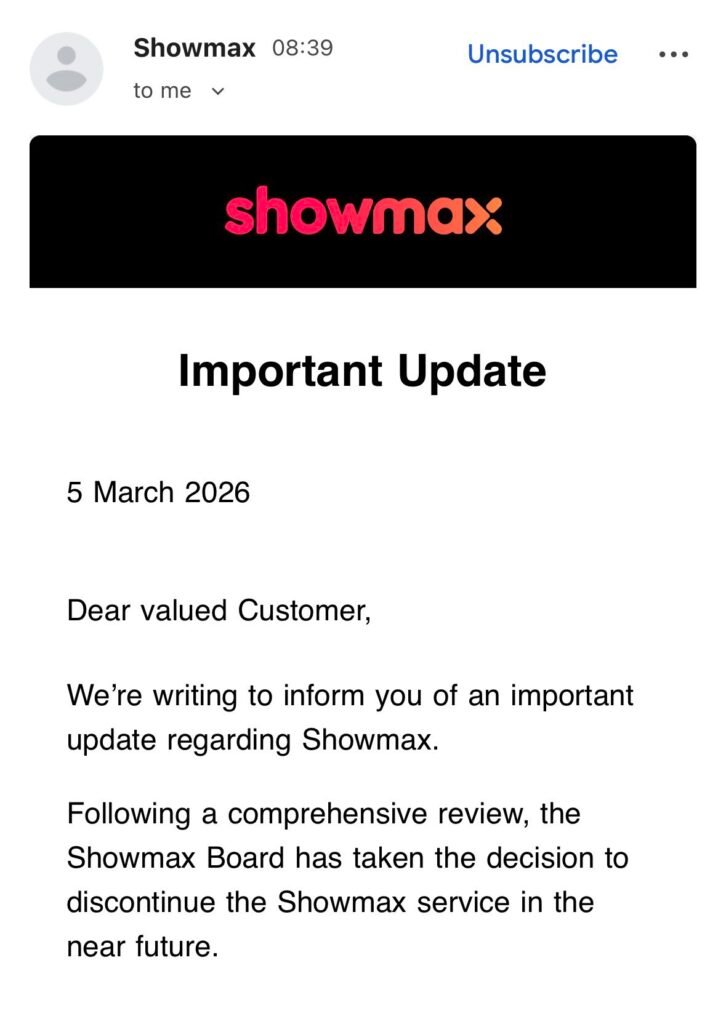
The most recent casualty. Showmax, owned by MultiChoice and relaunched in 2024 with NBCUniversal’s Peacock technology, received $309 million in equity funding. It operated across 44 African countries and commissioned original content in South Africa, Nigeria, Kenya, and Ghana. Subscribers grew 44% year-on-year.
It still was not enough. According to ShockNG, trading losses hit R4.9 billion in the financial year ending March 2025. Canal+, which acquired MultiChoice in October 2025, called Showmax “not a commercial success” and shut it down on March 5, 2026.
(Source: Variety — Canal+ Axes MultiChoice Streamer Showmax)
Why the Subscription Business Model Fails in Africa
The failure of the subscription model in Africa is not about a single bad decision. It is structural. The model was designed for economies with fundamentally different conditions — and importing it into African markets without adaptation has proven, repeatedly, to be catastrophic.
1. The Affordability Gap Is Insurmountable
A $5 monthly subscription might seem trivial in London or New York. In Nigeria, where GDP per capita hovers around $2,000, that same $5 represents a meaningful portion of a household’s daily food budget. A global study by Cloudward found that seven of the ten countries where people work the longest to afford a Netflix subscription are in Africa. In Rwanda, the average worker must labour for over four days to pay for one month of Netflix. In Norway, it takes 24 minutes.
Netflix has only 169,000 subscribers in Nigeria — a country of over 220 million people. According to a 2023 Business Day report, South Africa, with roughly one-third the population, accounts for 78% of Netflix’s African subscriber base. Affordability is not a speed bump. It is a wall.
2. Data Costs Make Streaming a Double Payment
Even when a subscription is affordable, the cost of the data required to actually stream content often exceeds the subscription price itself. According to Broadcast Media Africa, only about 4–5% of electrified TV households in Africa have access to fibre broadband. Most consumers rely on mobile data, where watching a two-hour film can consume 1–3 GB. In many markets, that data costs more than the monthly subscription fee, effectively doubling or tripling the real cost of the service.
3. Payment Infrastructure Creates Friction
Most global streaming platforms depend on recurring credit card transactions. Across much of Africa, consumers use prepaid mobile airtime, bank transfers, or mobile money. According to Señal News, only 7% of African streaming platforms have formal partnerships with telecom operators, compared to 39% in North America and 32% in Latin America.
4. Currency Volatility Destroys Unit Economics
Content licensing deals are priced in US dollars or euros. Revenue is collected in naira, rand, or Zimbabwean dollars. When currencies devalue — as the naira has done dramatically since 2023 — costs surge while revenue shrinks. According to Broadcast Media Africa, MultiChoice’s Nigerian revenue fell 44% year-on-year, from $355 million to $197 million, largely due to naira devaluation. Kwese TV collapsed entirely when Zimbabwe abandoned foreign currencies.
5. Free Alternatives Are Everywhere
YouTube is free. Piracy is rampant. Nollywood films circulate on WhatsApp, Telegram, and through informal DVD markets. When a consumer can access entertainment at zero cost, the psychological barrier to paying any subscription fee — even a discounted one — becomes enormous.
6. Even Global Giants Cannot Make It Work
According to Semafor Africa, Netflix invested $23 million in Nigeria and has been quietly shelving Nigerian originals. Amazon Prime Video paused all new African original productions in 2024. Disney lost $11 billion globally trying to build its streaming business. If the most well-capitalised companies in the world cannot crack the African subscription market, the model itself is the problem.
Netflix in Nigeria: The Numbers That Closed the Case
For anyone still questioning whether the subscription business model works in Africa, the Netflix data in Nigeria should settle the debate.
Despite entering Africa in 2016 and investing $175 million across South Africa, Nigeria, and Kenya, Netflix has struggled to scale in Nigeria. The company has 169,000 Nigerian subscribers out of a population of 220 million. According to Techpoint Africa, it has raised Nigerian subscription prices three times since 2024, with the premium plan now costing ₦8,500 per month. Insider reports suggest Netflix’s expenditures in Nigeria have significantly exceeded its earnings, leading to the quiet shelving of multiple commissioned Nigerian originals.
Filmmaker Kunle Afolayan, one of Nollywood’s most prominent directors, described Netflix’s scaling back as “the fatal last supper” in an interview reported by OkayAfrica.
YouTube: The Platform Africa Actually Chose
While subscription platforms burned through billions, YouTube became Africa’s real streaming platform — without ever trying to be one.
According to Rest of World, Nigeria has 31.6 million YouTube users, dwarfing Netflix’s 169,000 subscribers. A Vanguard report estimated that Nollywood-focused YouTube channels collectively generated $10–15 million per month in 2024, translating to $120–180 million annually. That figure is projected to approach $200 million in 2025. By comparison, Netflix, Amazon, and Showmax combined paid Nollywood an estimated $30–50 million in licensing fees over the same period.
YouTube’s dominance is driven by several factors that align perfectly with African market realities. The content is free, removing the affordability barrier entirely. Creators retain full control over their content and revenue. And crucially, according to TechCrier, 70% of watch time on Nigerian YouTube content comes from viewers outside Nigeria — diaspora audiences in London, Toronto, Houston, and New York, where advertising rates are significantly higher.
A filmmaker told Rest of World he produced a movie for $1,200 and earned $3,500 from his first YouTube payment alone. Nollywood stars like Ruth Kadiri (3.3 million subscribers, 481 million views), Omoni Oboli (1.2 million subscribers), and Maurice Sam (2.3 million subscribers) are building entire production empires on the platform. According to The Condia, five of YouTube’s top ten Nigerian creators in 2025 are Nollywood channels.
According to BusinessDay, channels earning over ₦1 million annually grew by 35% in 2025. YouTube watch time on TV screens in Nigeria grew by 40%, indicating that families are now gathering around smart TVs to watch Nollywood — on YouTube, not on subscription platforms.
The Real Lesson: Africa Does Not Have a Content Problem
Nollywood produces approximately 2,500 films per year, making it the second-largest film industry in the world by volume. According to UNESCO data cited by Global Voices, African cinema generates approximately $5 billion annually and has the potential to grow to $20 billion. Afrobeats is a global phenomenon. African stories are in demand worldwide. The content is not the issue.
The issue is the business model. The subscription model was built for economies where consumers earn $4,000 per month and pay $15 for streaming without a second thought. Transplanting that model into markets where the same $5 competes with food, transport, school fees, and generator fuel was always going to fail.
As Jason Njoku put it after spending $100 million learning this lesson: “We weren’t losing to a competitor. We were losing to the market.”
What the Future of African Entertainment Actually Looks Like
If the subscription model does not work, what does? The evidence from Broadcast Media Africa’s analysis and The Media Online points toward a fundamentally different approach — one that is ad-supported, mobile-first, and creator-owned.
Ad-supported distribution wins. YouTube’s success proves that African audiences will happily watch content with advertising if the content is free. Ad-supported video on demand (AVOD) removes the affordability barrier while monetising the massive diaspora audience through international advertising rates.
Mobile-first is non-negotiable. With approximately 600 million smartphones in use across Africa and only 4–5% fibre broadband penetration, any successful platform must be designed for mobile consumption — compressed video, offline downloads, and data-light experiences.
Creator ownership is the new distribution. The platforms that work in Africa put creators in control. On YouTube, a Nollywood filmmaker is the writer, director, distributor, and revenue owner. The old model of licensing content to a platform for a flat fee is being replaced by creator-driven channels that function as independent streaming services.
Diaspora monetisation is the hidden engine. Seventy percent of watch time on Nigerian YouTube content comes from outside Nigeria. The diaspora audience earns in dollars, euros, and pounds, and advertisers pay premium rates to reach them. Any viable African entertainment business must be built to capture this global revenue stream.
Telco partnerships bridge the access gap. Daily and weekly subscription options, data-inclusive bundles, and mobile money integrations can reduce friction for price-sensitive consumers. Platforms like Wi-flix in Ghana have attracted 1.5 million subscribers by charging as little as $0.65 per month.
Africa Is Not Cursed. The Business Model Was.
The $1.5 billion graveyard of African streaming ventures is not evidence that Africa cannot support digital entertainment. It is evidence that the subscription business model in Africa — at least in its Western form — does not align with the economic, infrastructural, and cultural realities of the continent.
Africa’s 1.4 billion people are hungry for entertainment. They are watching. They are engaged. They are creating. But they are doing so on their own terms — on YouTube, on mobile, for free.
The next billion-dollar African entertainment company will not charge a monthly subscription. It will be ad-supported, mobile-first, and built for people who earn in naira but watch in the millions.
YouTube did not try to beat Africa. It worked with Africa. And that is the lesson that $1.5 billion could not buy.
Sources & References
All data, quotes, and statistics in this article are sourced from the following publications. Click any link to read the original report.
[1] Jason Njoku Reflects on IrokoTV’s $100M Gamble — Pulse Nigeria, June 2025 — https://www.pulse.ng/articles/entertainment/movies/jason-njoku-reflects-on-ir…
[2] Court Freezes IrokoTV Boss Jason Njoku Bank Accounts Amid Debt Crisis — Gazette Nigeria, January 2025 — https://gazettengr.com/court-freezes-iroko-tv-boss-jason-njoku-bank-accounts-…
[3] Remembering HiTV as TSTV Comes to Town — Vanguard Nigeria, October 2017 — https://www.vanguardngr.com/2017/10/remembering-hitv-tstv-comes-town/
[4] HiTV — Grokipedia, January 2026 — https://grokipedia.com/page/HiTV
[5] Kwesé TV Finally Shuts Down — Nairametrics, August 2019 — https://nairametrics.com/2019/08/11/kwese-tv-finally-shuts-down/
[6] Econet’s Kwese TV Buckles to Economic and Viability Challenges — Equity Axis, August 2019 — https://equityaxis.net/post/9580/2019/8/econets-kwese-tv-buckles-to-economic-…
[7] Africa’s Kwesé Play Shuts Down After Two Years Operation — The Broadcast Bridge, 2021 — https://www.thebroadcastbridge.com/content/entry/13843/africas-kwese-play-shu…
[8] Cell C Pulls the Plug on Black — TechCentral, November 2019 — https://techcentral.co.za/cell-c-pulls-the-plug-on-black/180683/
[9] Low Subscriber Numbers and Debt Kill Cell C Black — ITWeb, November 2019 — https://itweb.co.za/content/xA9PO7NY685vo4J8
[10] Canal+ Axes MultiChoice Streamer Showmax — Variety, March 2026 — https://variety.com/2026/tv/global/canal-plus-multichoice-showmax-1236679536/
[11] Showmax Shutdown — Canal+ Confirms — ShockNG, March 2026 — https://shockng.com/showmax-shutdown-canal2026/
[12] The End of an Era: MultiChoice to Discontinue Showmax — Time Out Johannesburg, March 2026 — https://www.timeout.com/johannesburg/news/the-end-of-an-era-multichoice-to-di…
[13] Equal Prices, Unequal Earnings: Netflix Affordability Skewed Against Nigerians — BusinessDay, October 2025 — https://businessday.ng/technology/article/equal-prices-unequal-earnings-netfl…
[14] Streaming Struggles: Why Africa’s Market Presents Unique Challenges — Broadcast Media Africa, March 2026 — https://news.broadcastmediaafrica.com/2026/03/06/streaming-struggles-why-afri…
[15] Africa: Unlocking Streaming Potential Through Localization — Señal News, May 2025 — https://senalnews.com/en/data/africa-unlocking-streaming-potential-through-lo…
[16] MultiChoice Slashes HD Decoder Prices Amid Subscriber Decline — Broadcast Media Africa, October 2025 — https://news.broadcastmediaafrica.com/2025/10/24/multichoice-slashes-hd-decod…
[17] Netflix Cuts Nigeria Productions But No Exit — Semafor Africa, December 2024 — https://www.semafor.com/article/12/05/2024/netflix-cuts-nigeria-productions-b…
[18] Is Netflix Exiting Nollywood? — OkayAfrica, December 2024 — https://www.okayafrica.com/is-netflix-exiting-nollywood/164468
[19] Netflix Raises Prices in Nigeria for Third Time — Techpoint Africa, June 2025 — https://techpoint.africa/news/netflix-raises-prices-nigeria-third-time/
[20] Netflix Struggles to Adapt to Africa’s Cinema Market — Global Voices, January 2025 — https://globalvoices.org/2025/01/15/nexflix-struggles-to-adapt-to-africas-cin…
[21] African Streaming Services Are Struggling to Compete — Rest of World, November 2023 — https://restofworld.org/2023/african-streaming-services-compete-netflix-prime…
[22] Nigeria’s Filmmakers Turn to YouTube for Distribution — Rest of World, December 2023 — https://restofworld.org/2023/nigera-filmmakers-youtube/
[23] Nigerian Movie Industry Revenues: YouTube Vs Streaming Platforms — Vanguard, September 2025 — https://www.vanguardngr.com/2025/09/nigerian-movie-industry-revenues-youtube-…
[24] YouTube Says It’s Nigeria’s Go-To Entertainment Platform in 2025 — TechCrier, December 2025 — https://www.techcrier.com/2025/12/youtube-says-its-nigerias-go-to.html
[25] YouTube Dominates Nigerian TV in 2025 — The Condia, December 2025 — https://thecondia.com/youtube-nigeria-2025-nollywood-earnings-tv/
[26] YouTube Boom Doubles Nigerian Thousand-Dollar Earners — BusinessDay, March 2025 — https://businessday.ng/technology/article/youtube-boom-doubles-nigerian-thous…
[27] Streaming’s Next Frontier: Why Africa Needs a Different Playbook — The Media Online, June 2025 — https://themediaonline.co.za/2025/06/streamings-next-frontier-why-africa-need…
[28] The Future of Streaming Lies in Africa’s Overlooked Markets — Daba Finance, October 2024 — https://www.dabafinance.com/en/insights/the-future-of-streaming-lies-in-afric…